
Операции на позвоночнике в проверенных международных клиниках
Мы помогаем пациентам с сильной болью в спине и ногах, ишиасом, онемением, слабостью и трудностями при ходьбе найти проверенные клиники для операций на позвоночнике за рубежом — с учётом рекомендаций врачей, Вашего состояния и бюджета.
- Проверенные клиники
- Прозрачные и справедливые цены
- Полная поддержка до и после лечения
- Полная организация поездки
Обзор
Проблемы со спиной и позвоночником встречаются очень часто, но не каждая боль в спине требует операции. Многим пациентам помогают физиотерапия, медикаменты, инъекции, изменение образа жизни или просто время.
Операцию рассматривают, когда диск, кость, связка или сужение в позвоночнике сдавливают нервы, а консервативное лечение уже не помогает. Тогда боль в спине, ишиас, онемение и слабость могут стать серьёзными и трудно поддающимися лечению.
Цель большинства операций на позвоночнике — снять давление с поражённого нерва, уменьшить боль, улучшить подвижность и помочь пациенту вернуться к повседневной жизни с меньшим дискомфортом.
Что вызывает боль и потерю функциональности?
Грыжа / смещение межпозвоночного диска
Между позвонками находятся мягкие «подушки» — межпозвоночные диски. Если часть диска смещается, она может давить на близлежащий нерв. Это вызывает боль в пояснице и боль, отдающую в ягодицу, ногу или стопу, — то, что часто называют ишиасом.
Стеноз позвоночного канала
Стеноз означает, что пространство внутри позвоночного канала стало слишком узким. Это может сдавливать нервы и вызывать боль в спине и ногах, тяжесть, онемение, слабость или трудности при ходьбе.
Сдавление нерва
Когда нерв сдавлен, боль может не ограничиваться спиной. Она может отдавать в ноги или стопы и быть острой, жгучей, простреливающей или похожей на удар током.
Дегенеративные изменения
С возрастом артроз, износ дисков, утолщение связок или костные разрастания (остеофиты) могут уменьшать пространство вокруг нервов и затруднять ходьбу и повседневные движения.
Сколиоз
Сколиоз — это аномальное боковое искривление позвоночника. В лёгких случаях достаточно наблюдения, но выраженные или прогрессирующие искривления могут влиять на осанку и равновесие, вызывать боль, снижать дыхательную функцию и качество жизни.
Что происходит, если проблему не решать
Хроническая боль
Ограниченная подвижность
Потеря мышечной силы
Снижение качества жизни
Растущая зависимость от обезболивающих
В таких случаях операция может изменить жизнь к лучшему. Её цель — снять давление с поражённого нерва, уменьшить боль, улучшить движение и помочь пациенту вернуться к более привычной жизни.
Процедуры
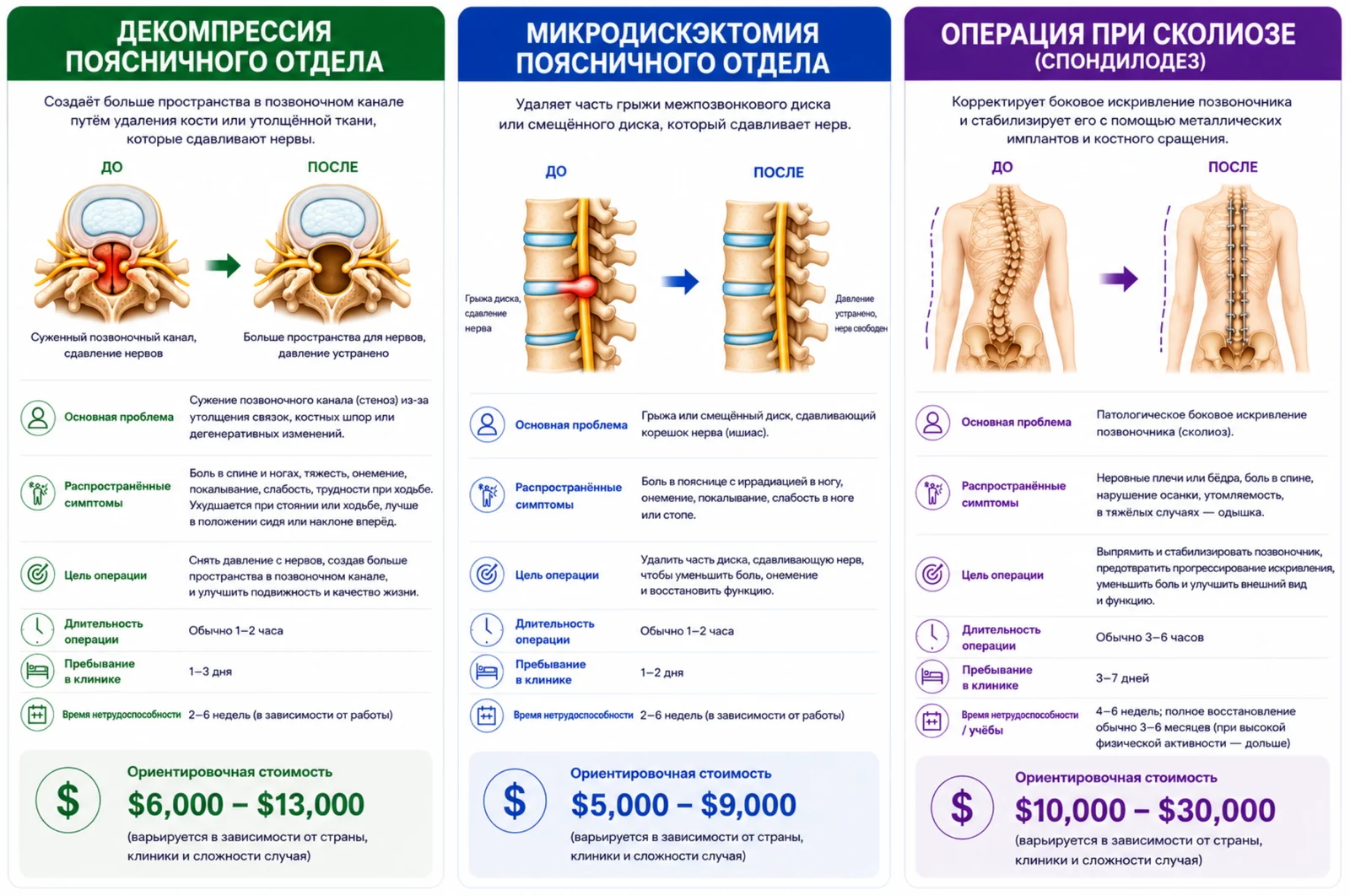
Основные вмешательства, которые подбирают пациентам. Точную процедуру определяет хирург после оценки МРТ.
Декомпрессия поясничного отдела
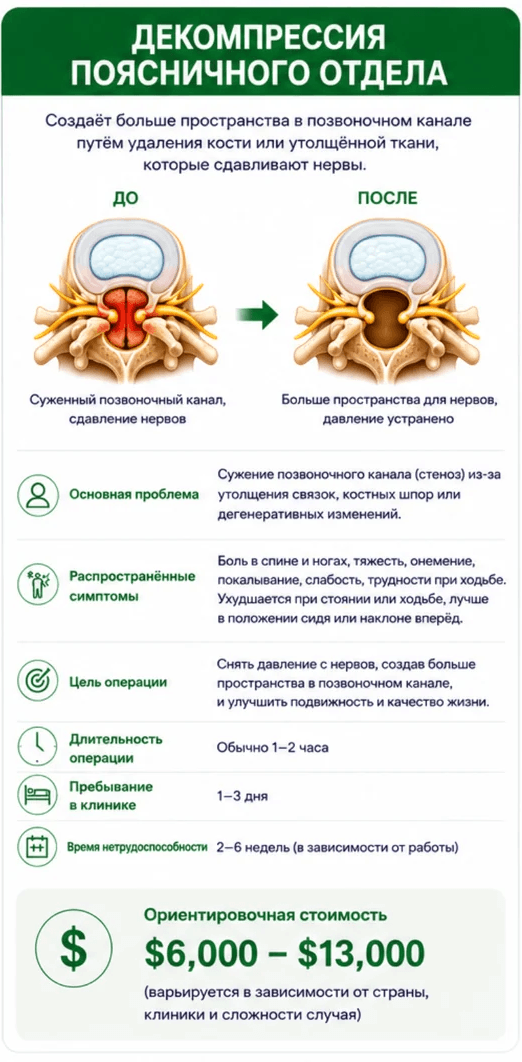
Декомпрессию поясничного отдела чаще всего применяют, когда позвоночный канал становится слишком узким и сдавливает нервы. Обычно это связано со стенозом позвоночного канала, утолщением связок, костными разрастаниями или дегенеративными изменениями.
Во время операции хирург удаляет ткань или кость, которая давит на нерв. Цель — освободить больше пространства для нерва и уменьшить боль, онемение, слабость или трудности при ходьбе.
- Болью в спине с симптомами со стороны нервов
- Болью, тяжестью или слабостью в ноге при ходьбе или стоянии
- Симптомами, которые уменьшаются сидя или при наклоне вперёд
- Стенозом позвоночного канала, подтверждённым на МРТ
- Сдавлением нерва, не поддающимся консервативному лечению
Микродискэктомия
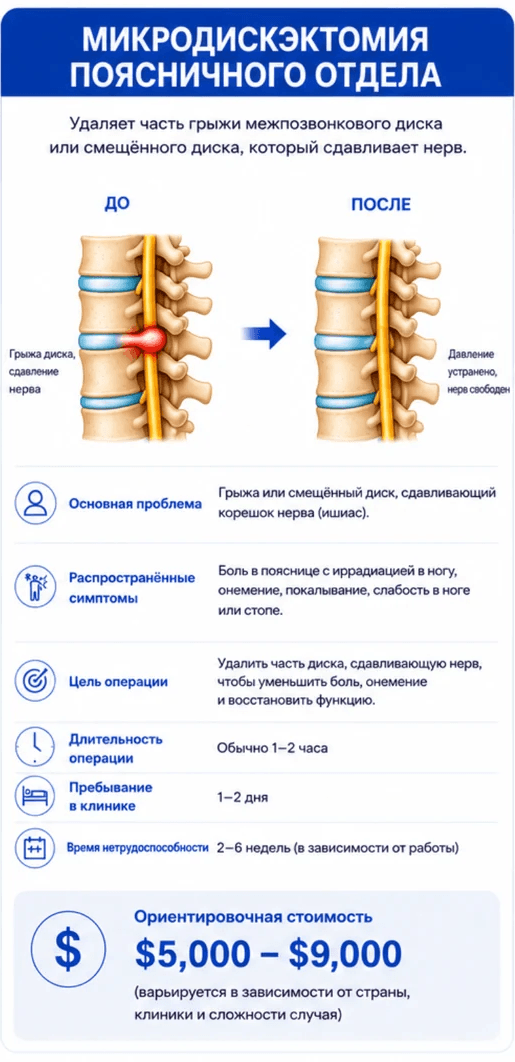
Микродискэктомию поясничного отдела чаще всего применяют, когда грыжа или смещённый диск давит на нерв и вызывает ишиас.
Во время операции хирург удаляет часть диска, которая давит на нерв. Это помогает уменьшить боль в спине, стреляющую боль в ноге, онемение, покалывание или слабость, вызванные раздражением нерва.
- Болью в спине с ишиасом
- Болью, отдающей из поясницы в ягодицу, ногу или стопу
- Грыжей диска, сдавливающей нерв, подтверждённой на МРТ
- Симптомами, не улучшившимися после медикаментов, физиотерапии или инъекций
- Сильной болью или нарастающей слабостью
Коррекция сколиоза
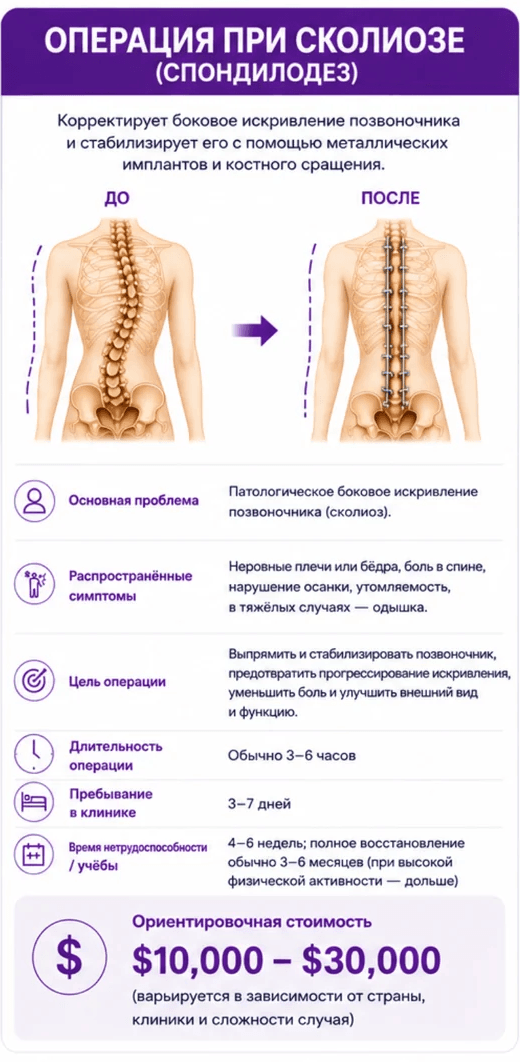
Операцию при сколиозе рассматривают, когда искривление позвоночника выраженное, прогрессирует, вызывает значимые симптомы или может усугубиться. Самая частая операция — спондилодез с использованием стержней и винтов, чтобы частично выпрямить позвоночник и остановить прогрессирование искривления.
Для растущих детей план операции может отличаться. В некоторых случаях хирурги используют «растущие» конструкции (раздвижные стержни) с последующим переходом к спондилодезу, когда рост близится к завершению.
- Выраженным или прогрессирующим сколиозом, подтверждённым рентгеном или осмотром специалиста
- Заметной асимметрией плеч, рёбер, спины, талии или таза
- Болью, снижением функции, проблемами с дыханием или значимым влиянием на качество жизни
- Искривлением, которое прогрессирует несмотря на наблюдение, корсетирование или другое лечение
- Рекомендацией хирурга после оценки возраста, остаточного роста, величины и гибкости искривления и общего состояния здоровья
Стоимость
Пакетная цена обычно покрывает всё необходимое. Наши услуги уже включены — отдельно Вы за них не платите. Итог зависит от страны, клиники, опыта хирурга и сложности случая.
| Процедура | Ориентировочная стоимость |
|---|---|
| Декомпрессия поясничного отдела | $6,000 – $13,000 |
| Микродискэктомия поясничного отдела | $5,000 – $9,000 |
| Коррекция сколиоза (спондилодез) | $10,000 – $30,000 |
Стоимость зависит от страны, клиники, опыта хирурга, уровня комфорта в больнице, объёма диагностики и сложности случая.
Что обычно входит в пакет
- Пребывание в больнице
- Трансферы из аэропорта и в больницу
- Послеоперационные консультации
- Предоперационные обследования
- Переводческое сопровождение
- Наше сопровождение и координация
Мы работаем напрямую с клиниками-партнёрами и имеем согласованные с ними условия по ценам. Стоимость, которую Вы получаете через нас, всегда равна или ниже той, что Вы получили бы при прямом обращении в клинику, — даже с учётом наших услуг Вы не платите никаких дополнительных сборов. Различия между ценовыми уровнями зависят от страны, клиники, опыта хирурга, уровня комфорта, объёма диагностики и сложности операции. Все клиники, с которыми мы работаем, соблюдают основные медицинские стандарты и стандарты безопасности.
Узнайте точную стоимость для вашего случая
Цена зависит от вашего состояния. Оставьте заявку — мы подготовим персональный расчёт.
До операции
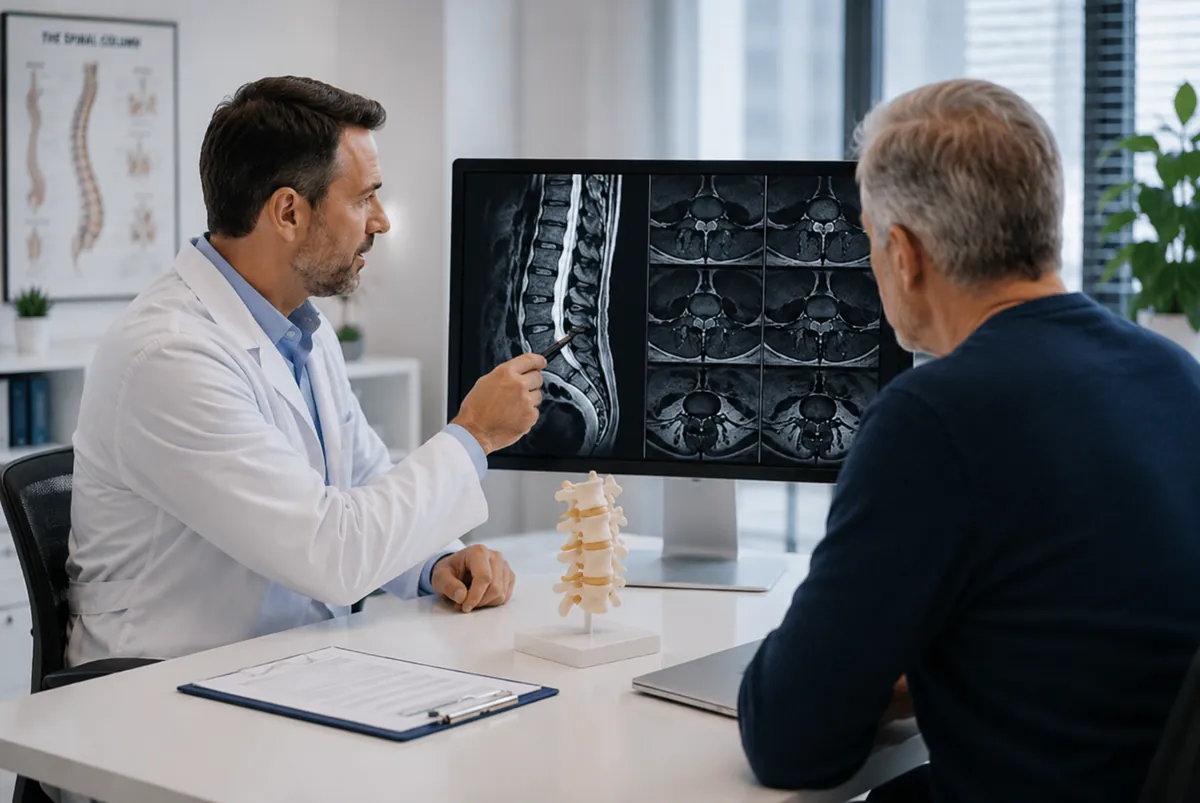
Перед операцией на позвоночнике врач обычно изучает Ваш снимок МРТ, симптомы, историю болезни, предыдущее лечение и общее состояние здоровья.
Предоперационные обследования могут включать
- МРТ позвоночника
- Анализы крови
- Консультацию анестезиолога
- Рентген или КТ
- ЭКГ / проверку сердца
- Пересмотр принимаемых лекарств
Хирург объяснит, показана ли операция, какая процедура рекомендуется, какие есть риски и какого восстановления стоит ожидать именно в Вашем случае.
Преимущества операции на позвоночнике
Польза операции зависит от заболевания. У одних пациентов главная цель — снять давление со сдавленных нервов. У других, например при сколиозе, цель может состоять в том, чтобы исправить ось позвоночника, стабилизировать его и не допустить дальнейшего прогрессирования искривления. Подходящим пациентам операция на позвоночнике может помочь:
Меньше боли в спине и ногах
При сдавлении нервов операция может уменьшить боль в спине, ишиас и боль, отдающую в ногу, за счёт снятия давления с поражённого нерва.
Лучше способность ходить
Пациентам со стенозом позвоночного канала бывает трудно долго ходить или стоять. Декомпрессия может увеличить проходимое расстояние и улучшить подвижность и повседневные движения.
Меньше онемения и покалывания
Если симптомы вызваны сдавлением нерва, снятие давления может уменьшить онемение, покалывание, жжение или слабость в ноге либо стопе.
Лучше ось и осанка
При сколиозе операция может помочь выпрямить и стабилизировать позвоночник, улучшить видимую осанку и баланс тела и снизить риск дальнейшего прогрессирования искривления — там, где это уместно.
Выше качество жизни
Меньше боли, лучше движение и осанка — становится легче спать, работать, учиться, путешествовать, заниматься спортом и возвращаться к привычной жизни.
Меньше обезболивающих
Некоторым пациентам после успешного восстановления требуется меньше обезболивающих — в зависимости от состояния и рекомендаций врача.
Риски, связанные с операцией
Возможные риски
- Инфекция
- Тромбы
- Подтекание спинномозговой жидкости
- Рецидив грыжи диска
- Реакция на анестезию
- Снижение гибкости в зоне спондилодеза
- Кровотечение
- Повреждение нерва
- Боль, которая не проходит полностью
- Необходимость повторной операции
- Проблемы с имплантатом или потеря достигнутой коррекции
Ни одна операция не гарантирует идеального результата. У части пациентов боль может сохраняться или позже может потребоваться дополнительное лечение — поэтому так важна оценка специалиста. Хирург решает, превышает ли ожидаемая польза риск именно в Вашем случае.
После операции
Восстановление после операции на позвоночнике происходит постепенно. Пациентам обычно рекомендуют начинать ходить вскоре после операции, но подъём тяжестей, наклоны, повороты и интенсивные нагрузки, как правило, ограничивают на несколько недель.
Общие рекомендации по восстановлению могут включать
- Регулярную ходьбу, начиная с коротких расстояний
- Избегание чрезмерных наклонов и поворотов
- Приём лекарств только по назначению врача
- Постепенное возвращение к работе — в зависимости от её характера и хода восстановления
- Отказ от подъёма тяжестей в течение нескольких недель
- Соблюдение рекомендаций по уходу за раной
- Посещение контрольных консультаций
Послеоперационные рекомендации обсуждаются на консультации с Вашей медицинской командой. Мы также поможем наладить связь с клиникой для последующего наблюдения после Вашего возвращения домой.
При операции по поводу сколиоза восстановление и наблюдение обычно более длительные и интенсивные, чем при небольших поясничных вмешательствах, особенно у детей и подростков. Семьям следует ожидать подробных рекомендаций по учёбе, поездкам, ограничению нагрузок, физиотерапии и контрольным снимкам.
Запишитесь на бесплатную консультацию
Расскажите о вашей ситуации — мы подберём клинику, которая наилучшим образом соответствует вашему случаю и бюджету.
-
Бесплатно, без обязательств
-
Консультация с врачом
-
Рекомендации клиник
-
Сопровождение до и после
Бесплатная консультация
Расскажите о своих целях и обстоятельствах
- Объясните Ваши цели и обстоятельства
- Узнайте подробнее о процедуре
- Запланируйте разговор с врачом
- Узнайте, чем мы можем помочь
- Получите информацию о подходящих клиниках
- Оставайтесь на связи до и после процедуры